


Key Takeaways
It tells you exactly what you qualify for:
The test confirms which Search feature enhancements your markup is eligible for and flags problems with clear error and warning messages.It reflects what real users see:
It renders both mobile and desktop versions, previews how the rich result will appear, handles dynamically loaded markup, and stays aligned with your Search Console reports.RebelMouse generates the markup for you:
Structured data works out of the box for images, videos, articles, and listicles, so pages stay eligible for rich results with no manual schema configuration.The Rich Results Test is now Google's primary checker:
It replaces the deprecated Structured Data Testing Tool as the way to validate the structured data that powers enhanced search results.
Google recently announced that its Rich Results Test is out of beta and now fully supports all of its rich results features.
Powered by structured data, rich results are the dynamic snippets you see at the top of Google's search results, whether it's a carousel, image, or listicle. Used correctly, like for reviews, can lead to traffic growth.
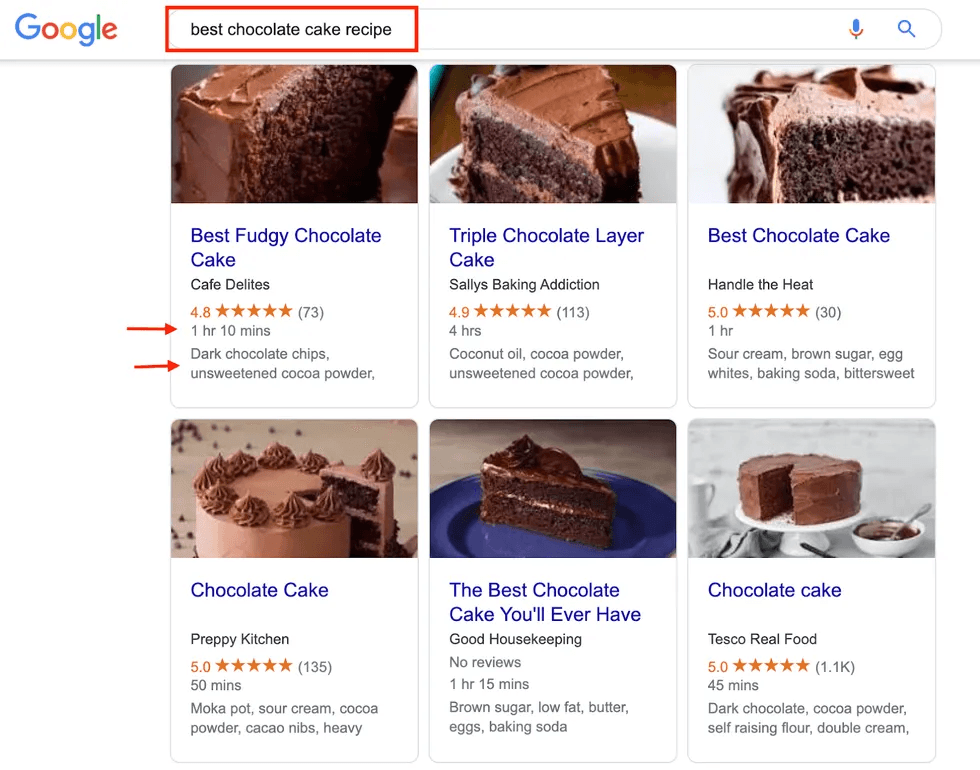 An example or Google's rich results for recipes.
The Rich Results Test determines if your website's structured data is set up correctly so that your page can be eligible for rich results. With this latest update, Google will be deprecating its Structured Data Testing Tool. Here are some reasons from Google about why the prioritization of their Rich Results Test is an upgrade:
- It shows which Search feature enhancements are valid for the markup you are providing.
- It handles dynamically loaded structured data markup more effectively.
- It renders both mobile and desktop versions of a result.
- It is fully aligned with Search Console reports.
With the Rich Results Test, you can use a URL or a snippet of code to see if there are any errors within your structured data. For example, if your web page is missing an image, it could still be eligible for rich results, but would display without an image. Here's an example of what these warnings look like in the Rich Results Test:
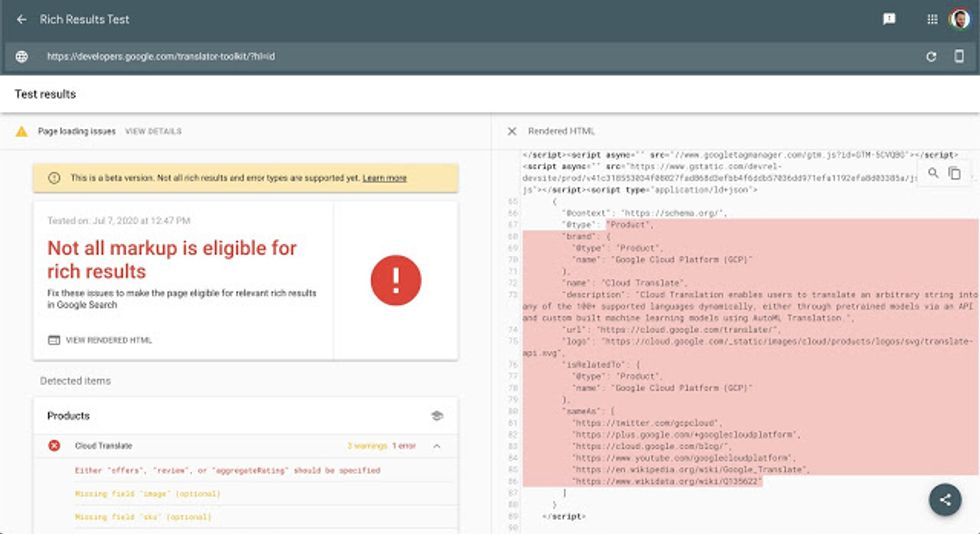
And here's an example of what the test results will look like if your site has structured data marked up correctly:
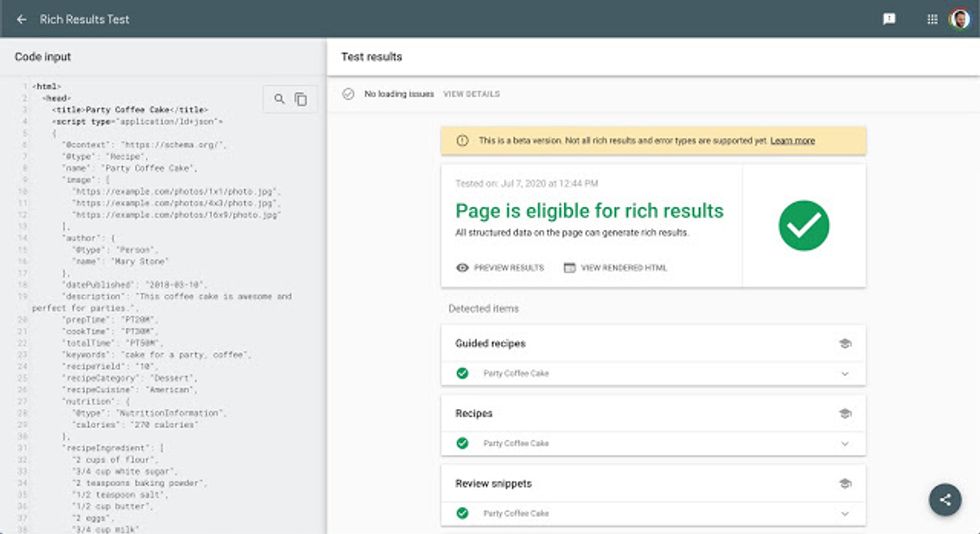
The Rich Results Test also allows you to preview what your page will look like as a rich result on search:
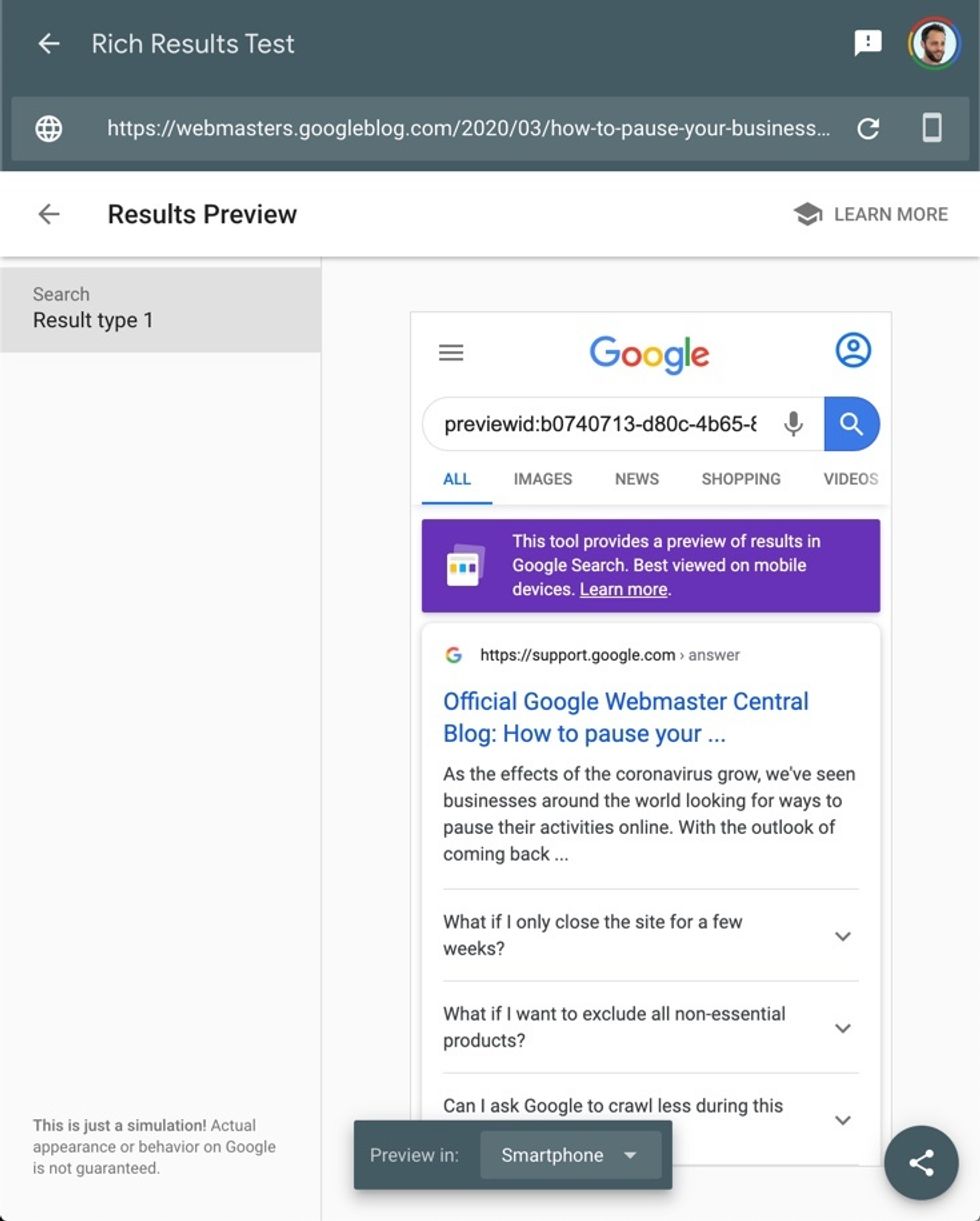
If you're new to structured data, it can seem like a lot to learn. At RebelMouse, we have out-of-the-box structured data integrations. This means that our platform makes it easy for every element of your content to be marked up correctly for structured data, whether it's an image, video, article text, or listicle.
If you're not on RebelMouse and you want to make it into Google's rich results with ease, request a proposal today to get started. If you're already publishing with RebelMouse and have questions about Google's switch to its Rich Results Test, email support@rebelmouse.com or talk to your account manager today.
Frequently Asked Questions
What are rich results?
Rich results are the dynamic snippets that appear at the top of Google search, shown as things like carousels, images, or listicles. They are generated from the structured data you add to a page, and they help your listing stand out and earn more attention. They can easily be tested with the Rich Results Test.
Did it replace another tool?
Yes. Google deprecated the older Structured Data Testing Tool and now positions the Rich Results Test as the primary way to validate markup. It handles dynamically loaded structured data more effectively and stays aligned with Search Console.
What is the Rich Results Test?
It is a free Google tool that checks whether your structured data is set up correctly and whether your page is eligible for rich results. You give it a live URL or a snippet of code, and it returns the result for both mobile and desktop.
How do you read the test output?
The test shows which search enhancements your markup is eligible for, plus error messages for invalid markup and warning messages for incomplete elements. It also previews how the rich result will look. On RebelMouse the correct markup is generated automatically, so most pages pass without manual work.
Related Articles
- Create Google Structured Data for Videos
- Google's Structured Data Integration on RebelMouse
- Conquer Your Crawl: Feed the Googlebot With Structured Data
- Writing for Structured Data
- Custom Structured Data for Post Elements
- Structured Data: Mark up Assembler for Google's Carousel Feature
- Take Advantage of Google's Structured Data for Lead Media + Assembler Videos
- Structured Data: Choose Your Article Attribute


