
Key Takeaways
An audit gives you one honest picture across every channel:
It reviews your goals, website, SEO, social, email, and paid efforts in a single structured pass, so you can prioritize fixes by impact instead of guessing.Start with goals, end with an action plan:
The process runs from defining clear objectives to compiling findings into a prioritized plan, then monitoring and adjusting on a regular cadence rather than treating the audit as a one time event.Search is where long term growth compounds:
Organic search drives the majority of trackable site traffic and strong backlinks remain closely tied to visibility, so SEO deserves real weight in any audit.Do not overlook email:
Email is consistently one of the highest return channels in marketing, which is why a campaign review belongs in every audit alongside the flashier channels.
Digital marketing is at a crossroads. The explosion of AI has begun to make publishers nervous about not only automated content creation, but the powerful nature of AI-driven search that could reduce search traffic to their sites. While these concerns are valid, there’s still plenty of room across the open web for successful websites and effective digital marketing.
The unpredictable climate means it's the perfect time to make sure your marketing efforts are as sharp as can be. A digital marketing audit can help you get a better assessment of your current strategies, so that you can identify strengths and weaknesses in your current business model. Whether you’re a small business, big brand, agency, or something in between, conducting a digital marketing audit is essential for maximizing ROI.
Here’s a step-by-step guide that takes you through performing a comprehensive digital marketing audit.
Step 1: Define Your Goals
Before diving into the audit, it’s important to define what it is you hope to achieve after the audit is completed. For example, are you looking to increase brand awareness, boost conversion rates, increase lead generation, or increase customer engagement? Maybe it’s all of the above and more. Once you’ve clearly defined what your goals are, make sure that each step of the auditing process addresses those objectives.
Step 2: Assess Your Current Digital Presence
Next, you should take inventory of your digital assets that could need refreshing. These can include:
Website
Your website is the foundation of your digital presence. In an audit, focus on these core areas:
- Design
- User experience
- Mobile-friendliness
- Page performance
Social Media
Social channels reveal how your brand is perceived and how engaged your audience really is. Look at growth and activity across every major platform, focusing on:
- Engagement rate
- Follower growth
- Be sure to track across all active social networks
Email Marketing
Email is often your most direct line to customers. Use the audit to measure both the size of your list and the quality of engagement.
- Newsletter audience size
- Average open rate
- Click-through rate
- Engagement metrics
Content
Content fuels discovery and loyalty. Focus on:
- Quality
- Relevance
- Performance
SEO
Search visibility determines how easily new audiences can find you. A digital audit should include a review of your core SEO health, including:
- Search engine rankings
- Keyword profiles
- Organic search volume
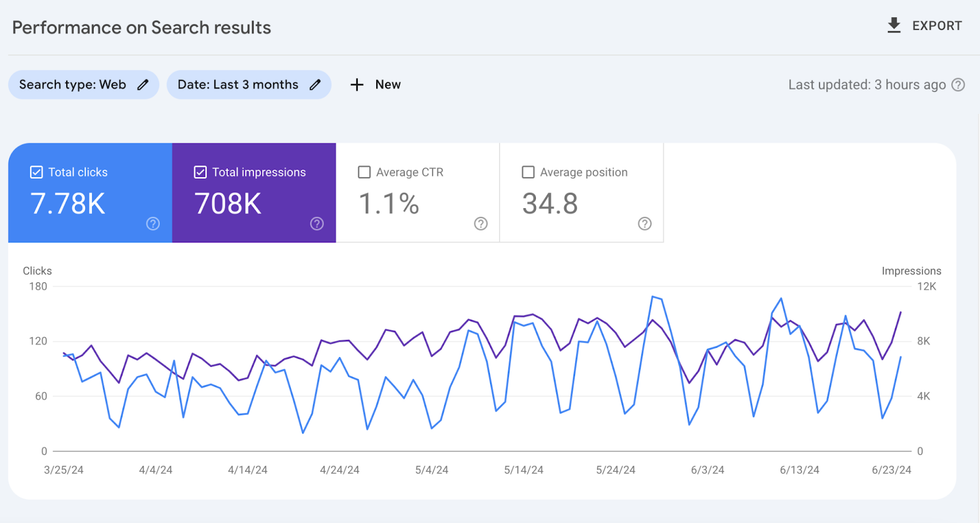 Google Search Console can help you evaluate your search performance.
Step 3: Analyze Your Website’s Performance
Usually your website is your first point of contact with new customers. Tools like Google Analytics can help you analyze:
Traffic Sources
Understand where your visitors are coming from and how they discover you.
- Organic search
- Direct traffic
- Referral traffic
- Paid traffic
User Behavior
Look at how people interact with your site to understand their behaviors.
- Bounce rate
- Average session duration
- Pages per session
Conversions
Check whether your site is turning visitors into leads or customers.
- Conversion rate
- Goal completions
- E-commerce metrics (if applicable)
Technical Issues
Technical health is the basis for every other metric. Identify and resolve issues that create friction.
- User experience errors
- Broken links
- Site performance issues
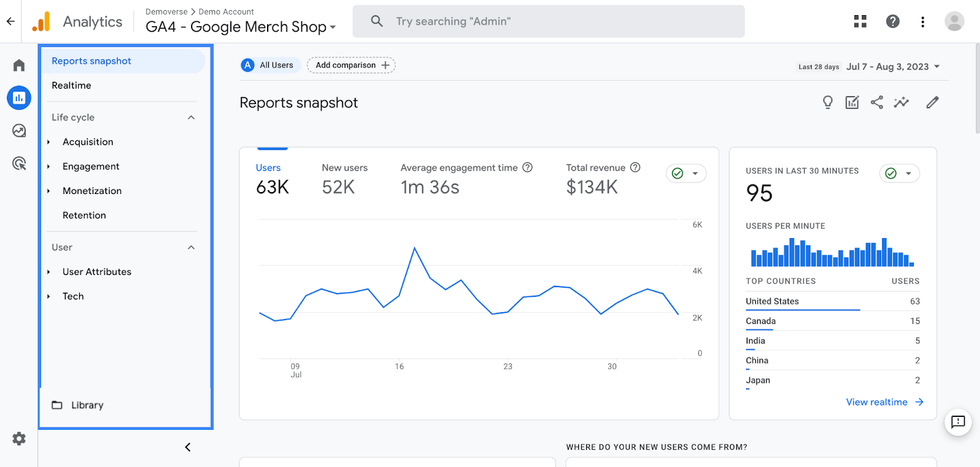 See reports on your website’s key performance indicators with Google Analytics. Screenshot from Google.
Step 4: Evaluate Your SEO Strategy
Search traffic is one of the most powerful drivers of long-term growth. A structured SEO audit ensures your content and site architecture are fully optimized.
Keyword Analysis
Identify which keywords are bringing in traffic and spot new opportunities.
- High-performing keywords
- New or emerging opportunities
- Optimization of existing content
On-Page SEO
Check that your site’s pages are optimized for both users and search engines.
- Title tags
- Meta descriptions
- Headlines
- Images and alt text
Off-Page SEO
Backlinks still play a key role in visibility and authority.
- Quality backlinks
- New link opportunities
- Referral sources
Content Audit
Your content determines whether visitors stay, engage, and convert.
- Relevance to audience needs
- Overall quality and accuracy
- Gaps where new content could drive traffic
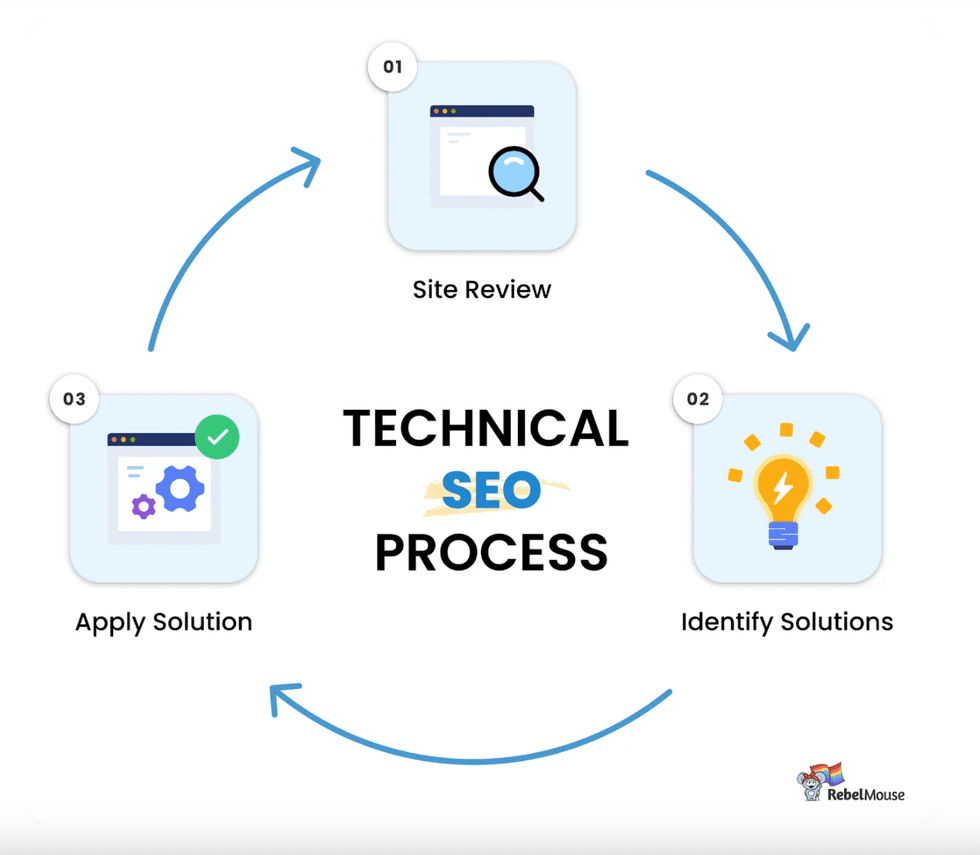 RebelMouse offers comprehensive SEO audits. Click here to learn more.
Step 5: Review Your Social Media Presence
Social media can be a powerful way to build awareness and engagement — but only if your strategy is aligned with your brand and audience. An audit helps you spot gaps and opportunities.
Platform Performance
Assess how each platform contributes to your overall goals.
- Reach
- Engagement
- Traffic driven to your site
Content Strategy
Evaluate whether the content you share is aligned with your brand and effective in driving action.
- Types of content posted
- Consistency with brand tone and goals
- Effectiveness of different formats (posts, stories, video, etc.)
Audience Analysis
Understand who is engaging with your content and how.
- Demographics by platform
- Audience preferences
- Behavior and activity trends
Engagement Rates
Measure how well your content connects with your followers.
- Likes, comments, and shares
- Post-level engagement performance
- Patterns in top-performing content
Step 6: Analyze Your Email Marketing Campaigns
Email marketing is one of the most effective ways to reach your target audience directly. You can audit your newsletter campaigns by evaluating:
List Quality
Check the health of your subscriber base and ensure you’re targeting the right segments.
- Inactive subscribers
- Bounce rates
- Opportunities for better segmentation
Campaign Performance
Measure whether your campaigns are actually driving results.
- Open rates
- Click-through rates
- Conversion rates
- Engagement metrics over time
Content and Design
Review your emails from the reader’s perspective to ensure clarity and engagement.
- Overall content quality
- Design and layout
- Calls-to-action (CTAs)
Automation
Evaluate workflows to uncover gaps or missed opportunities for personalization.
- Triggered campaigns (welcome series, re-engagement, etc.)
- Personalization opportunities
- Workflow performance and coverage
Step 7: Deep Dive Into Your Paid Advertising Efforts
Campaign Performance
Evaluate how well your campaigns are performing across channels.
- CTR (Click-Through Rate)
- CPC (Cost Per Click)
- Conversion rates
Targeting and Segmentation
Make sure your ads are reaching the right people with the right message.
- Audience definitions
- Targeting parameters
- Segment testing and refinement
Ad Creatives
Strong design and messaging are critical for ad performance.
- Quality of visuals and copy
- Message clarity
- Call-to-action strength
Budget Allocation
Assess how you’re distributing spend across campaigns and platforms.
- Budget per channel
- Cost vs. performance alignment
- Optimization opportunities
Step 8: Compile Your Findings and Create an Action Plan
After you’ve gathered all of the necessary data, compile your findings into a report that’s easy for you and your team to understand. You can do this by highlighting key insights, areas for improvement, and immediate action items. Develop and prioritize the tasks that need addressing and capitalize on newly identified opportunities as soon as you can.
Step 9: Monitor and Adjust
A digital marketing audit is not a one-and-done type of task. It’s important to regularly monitor your performance metrics and let them tell you a story about how you need to adjust your strategy. In today’s publishing landscape, it isn’t as important to have big, viral wins — you want continuous, sustainable growth through constant improvement instead.

Start Crushing KPIs With RebelMouse
Systematically evaluating your digital presence is a daunting task, but it’s an invaluable chore that will help you consistently meet your business goals.
One thing that can help your audit process is being supported by the right technology and expertise. RebelMouse is an AI-enabled platform that makes it easy for the sites in our network to win big on every platform, including site, social, and search. We’ve got both the built-in integrations to set up your content for success and the team you need to make sure your digital checklist is always taken care of and improving.
If you want to reevaluate your current digital presence and make sure that your content is optimized from start to finish, request a demo today and let’s talk about how we can work together.
Frequent Asked Questions
What is a digital marketing audit?
It is a structured review of your entire online presence, covering goals, website performance, SEO, social, email, and paid advertising. The point is to see clearly what is working and what is not, so you can direct budget and effort toward the highest return improvements.
What does a digital marketing audit include?
A complete one works through nine areas: define goals, assess your current digital presence, analyze website performance, evaluate SEO, review social media, analyze email campaigns, examine paid advertising, compile findings into an action plan, then monitor and adjust.
How often should you run one?
Treat monitoring as continuous and run a full audit on a regular schedule, commonly once a year with lighter quarterly check ins. Markets, algorithms, and AI driven discovery shift quickly, so a yearly snapshot plus ongoing tracking keeps you from drifting.
Which metrics matter most in an audit?
It depends on your goals, but the durable ones are organic traffic and rankings, referring domains, conversion rate, email engagement and ROI, paid return on ad spend, and core site performance like load speed. Tie every metric back to the goal it supports rather than tracking numbers for their own sake.


