
Key Takeaways
- SGE was the experiment, AI Overviews is the reality: Google announced the Search Generative Experience at I/O in 2023 as an opt in Search Labs test, then launched it in the US as AI Overviews on May 14, 2024.
- AI answers now sit above the links: An AI summary appears on a large and shifting share of searches, around one in five in early 2025, which changes how often people ever reach the blue links.
- Clicks are harder to win: Pew found users clicked a result 8 percent of the time when an AI summary was present versus 15 percent without one, so being cited inside the answer now matters as much as ranking beneath it.
- Structure and authority decide who gets cited: Clear, well organized, authoritative content that AI systems can read and trust is what earns a place in the generated answer, which is exactly what an AI ready platform is built to support.
Google has begun the rollout of its Search Generative Experience (SGE) to select users. This new feature leverages generative artificial intelligence (AI) to enhance the search experience.
The goal of Google’s new generative AI-powered search is to simplify search by providing users with a snapshot of information to help them understand topics more quickly. According to Google, SGE will “help you take some of the work out of searching, so you can understand a topic faster, uncover new viewpoints and insights, and get things done more easily. So instead of asking a series of questions and piecing together that information yourself, search now can do some of that heavy lifting for you.”
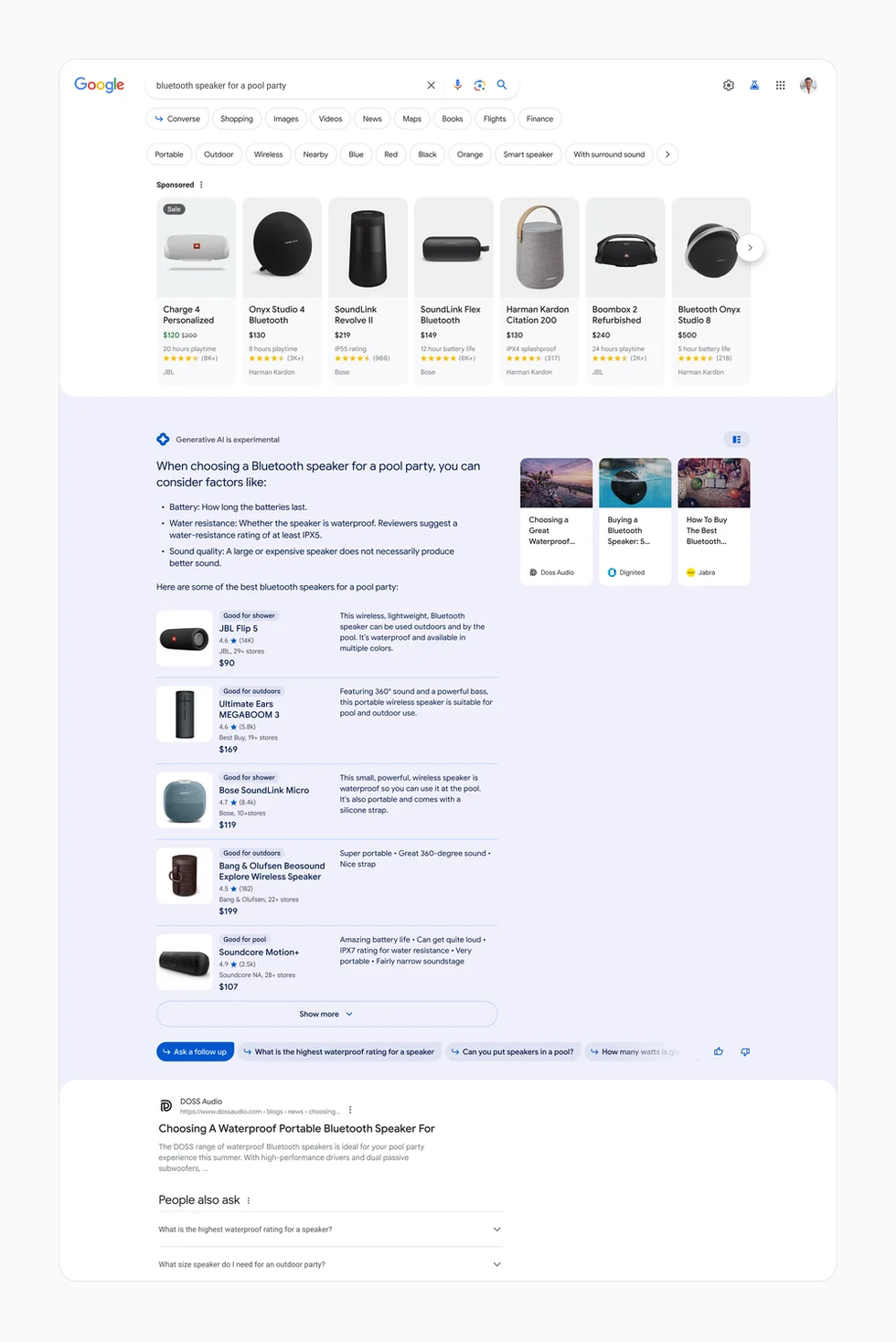 An example of search results using Google’s new Search Generative Experience. From Google.
Benefits of Google’s AI Search Generative Experience
According to Google, there are three ways its new generative AI capabilities can make searches simpler:
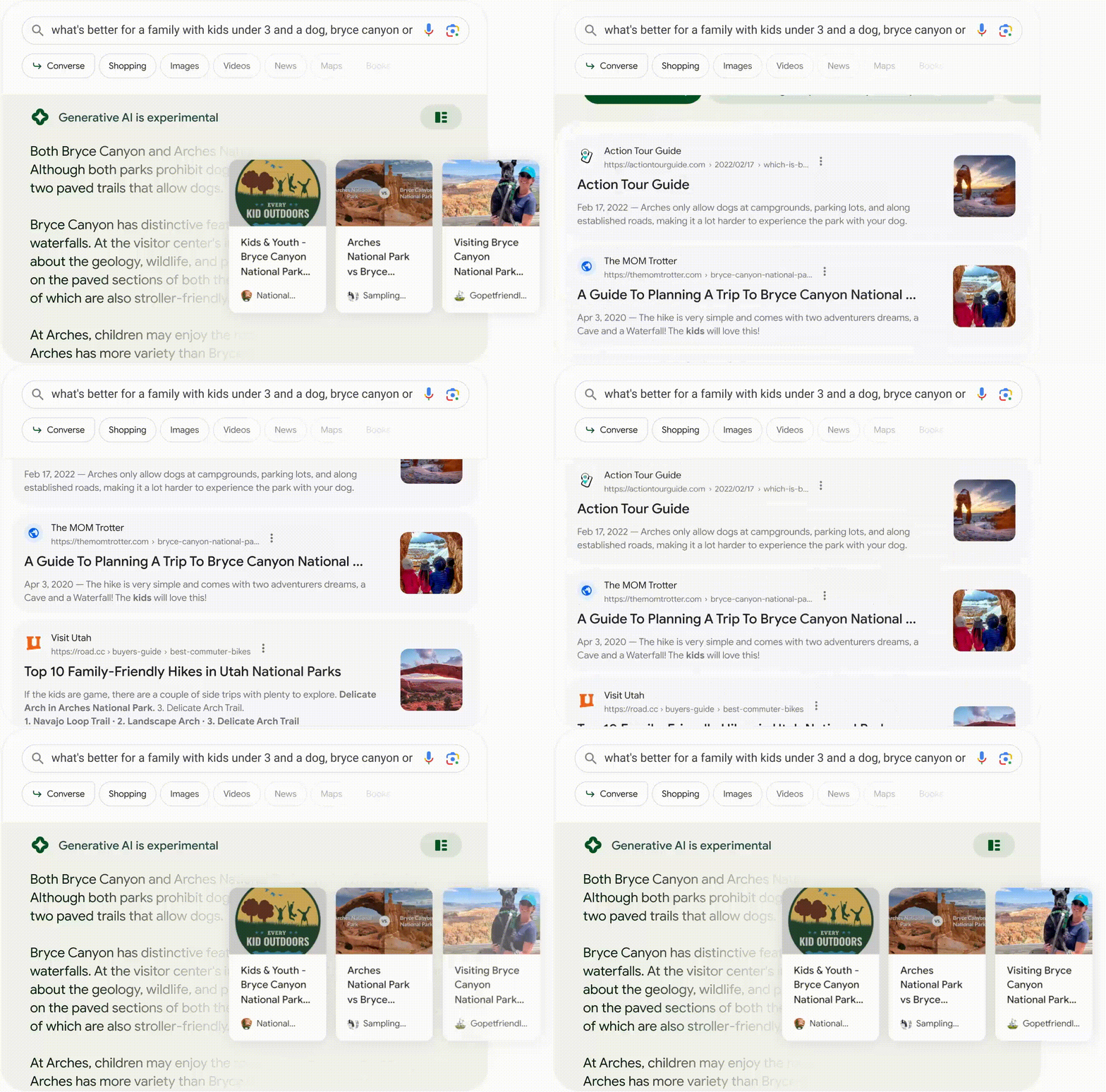
- Understanding Complex Topics: SGE provides an AI-powered snapshot to help users grasp the key factors and considerations of a topic, such as learning ukulele versus guitar, or the benefits of incorporating a business before freelancing.
- Quick Tips for Specific Questions: With SGE, users can submit specific queries and receive a variety of content from across the web. For example, searching for how to remove a coffee stain from a wool sweater, or how to quickly renew a passport, will provide pointers and options
- Shopping Assistance: Search offers information on products and considerations for various needs. Users can search for specific items like peel-and-stick wallpaper for the kitchen, or a Bluetooth speaker for a pool party, and find important product details, like customer ratings and options to purchase.
Click here to read more on Google’s take on the benefits of its Search Generative Experience. The rollout of SGE is a part of Google’s Search Labs, a new program that opens up features still in the experimental phase to users. To see if you’re able to join the waitlist for Search Labs, click here.
Feedback on SGE’s Rollout
Following the launch of Search Generative Experience by Google, the select users who gained early access began sharing screenshots of the new feature across Twitter. Of course, they also discovered some hiccups along the way, including word-for-word content duplication.
As you can see in the Twitter thread above, Google reminded users that SGE remains firmly rooted in its experimental phase.
SEO influencer Andy Simpson shared this video of his experience with SGE:
First look at Google Search Generative Experience, SGE
Click here to read more feedback from early users of SGE over at Search Engine Roundtable.
Harness the Power of AI Search
Google is fully embracing the inevitable role AI technology will play in search. Similar to how AI will completely revolutionize traditional search, it’s also set to transform conventional website search.
AI-powered search offers a solution that can transform website search into an experience that outshines traditional search. With AI, search engines can interpret user queries more effectively, even when users make typos or use the wrong words. This means that users can find what they’re looking for quickly and easily, and website owners can provide search experiences that meet the high expectations of their users.
RebelMouse is a publishing platform that leverages AI-powered search to deliver enhanced user experiences and engagement on websites. Traditional search engines use a set of predefined rules to match user queries with indexed content, which can lead to irrelevant results.
RebelMouse solves this by consolidating all of your content, along with its accompanying metadata and stats, into a private AI data model. This model leverages the power of OpenAI’s technology to deliver personalized search results and content recommendations that are tailored specifically to your site. Click here to learn more.
So far the results have been impressive:
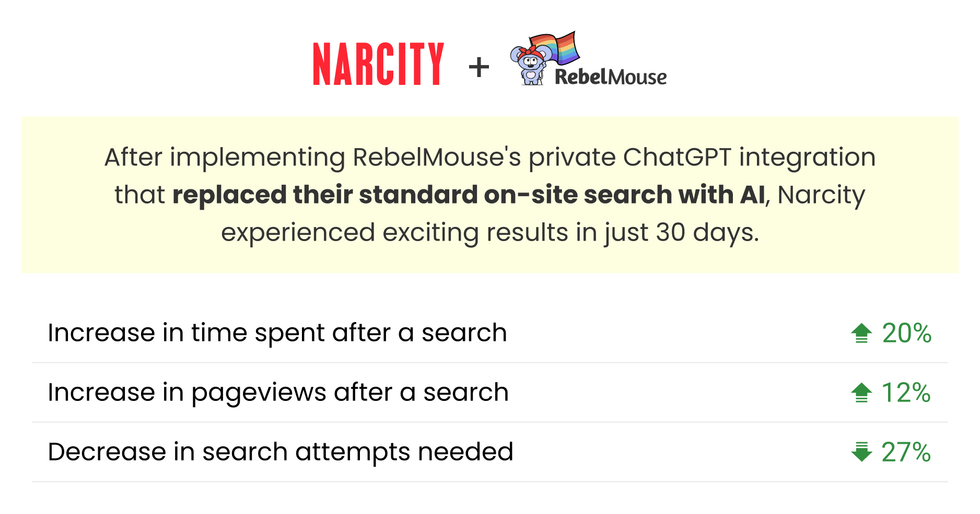
Curious to learn more? Click here to check out the rest of our AI features and get started.
Frequent Asked Questions
What is Google's Search Generative Experience (SGE)?
SGE was Google's experimental AI search layer, announced at Google I/O in May 2023 and offered through Search Labs. It produced an AI snapshot at the top of results to help people understand a topic faster. It was the testing phase of what is now live as AI Overviews.Add the timeline and the rebrand: SGE was announced at Google I/O in May 2023 as an experiment, and it launched in the US as AI Overviews on May 14, 2024.Sources: Google I/O 2024 blog.
Is it still called SGE?
Mostly no. Google rebranded the live version as AI Overviews and launched it for US users on May 14, 2024. You will still see "SGE" in older coverage, but the current product name is AI Overviews.
How do AI Overviews affect publishers and clicks?
They tend to reduce clicks to websites. Pew Research found people clicked a result 8 percent of the time when an AI summary appeared, compared to 15 percent when one did not, and zero click searches have risen sharply since the launch. Since search is often a publisher's largest external traffic source, that shift is significant.
How can publishers stay visible in AI search?
Focus on being citable inside the answer: clear structure, accurate and authoritative content, clean technical setup, and crawler access. The goal moves from only ranking in the list to being the source the AI quotes. A platform built for AI ready content makes that consistent rather than a per page scramble.


