


According to WPZOOM, there are over 70,000 plugins for WordPress. Seventy. Thousand.
Plugins were supposed to make building and maintaining websites easier. And while they might well do that, they also introduce bloat, break things, and quietly chip away at your site’s speed, security, and stability.
The fastest way to wreck your site’s web performance is the same as it was a decade ago: Install a plugin for everything.
Plugins Break Everything
Fun thought: Plugins aren’t made for your site; they’re made for every site. That means they often load assets globally, inject scripts into every page, and more often than not duplicate features and functions that you already have.
In fact, Google's web.dev actively advises that third-party scripts “affect privacy, security, and page behavior—and they can be particularly problematic for performance.”
If you’re not carefully keeping track of your plugins (and really, who does?), you may see issues such as broken features, slow load times, and, worst of all, frustrated users.Plugins Introduce Risk

In a 2022 report, Sucuri found that 36% of all compromised websites had at least one vulnerable plugin or theme present. And while correlation does not mean causation, it’s known that WordPress has both the largest plugin library, and, according to the Sucuri report, the highest percentage of infections.
And it’s not just security. Plugins break. They conflict with other plugins, or even with your core content management system (CMS). One update and your whole checkout process might collapse.
If you’re not worried about plugins yet, brace yourself for the data from Wordfence. As just one example, in June 2025, a vulnerability in SureForms made it possible for bad actors to delete files, even critical ones like wp-config.php.
This particular story had a swift resolution, as a patch was released quickly and solved the issue. But with 70,000+ other plugins out there, you’re gambling with each and every one of them.
The Plugin Risk Domino Effect
There’s a great deal of complexity built into every website that exists today (well, maybe not every website). It’s virtually certain that some day, some thing will fail on your site. When that does happen, you’ll want it to be debugged and fixed, fast.
If you have 10 plugins (in addition to all of the other tech in your stack), guess what? You’ll have to debug every one of them to find out that one of them is (maybe) the culprit.
Quadlayers makes a great comparison to add-on features for your car:
Imagine your website as a car. The plugins are the additional features you install, such as a GPS system or upgraded audio. While these additions can enhance the driving experience, too many unnecessary or poorly installed features can weigh the car down, reduce its efficiency, and increase maintenance needs. Similarly, plugin bloat occurs when too many plugins or inefficiently coded plugins overload your website, slowing it down and affecting its overall performance.
With more and more plugins (sometimes even a plugin to fix what another plugin broke!) and themes, you have to diagnose performance issues, which can be like untangling headphones in the dark.
There’s a Better Way
While plugins may be a way of life, and necessary on a website, there are smart ways to go about them. The simplest answer is to stop treating plugins like they’re a natural part of your website and the answer to all of your problems.
Use plugins wisely and sparingly. Do your research and vet everything you add to your site. But still be vigilant as even the highest reviewed and most senior plugins can fail.
In addition, make sure to build your site following the basic fundamentals of the web, and always look to future-proof your site.
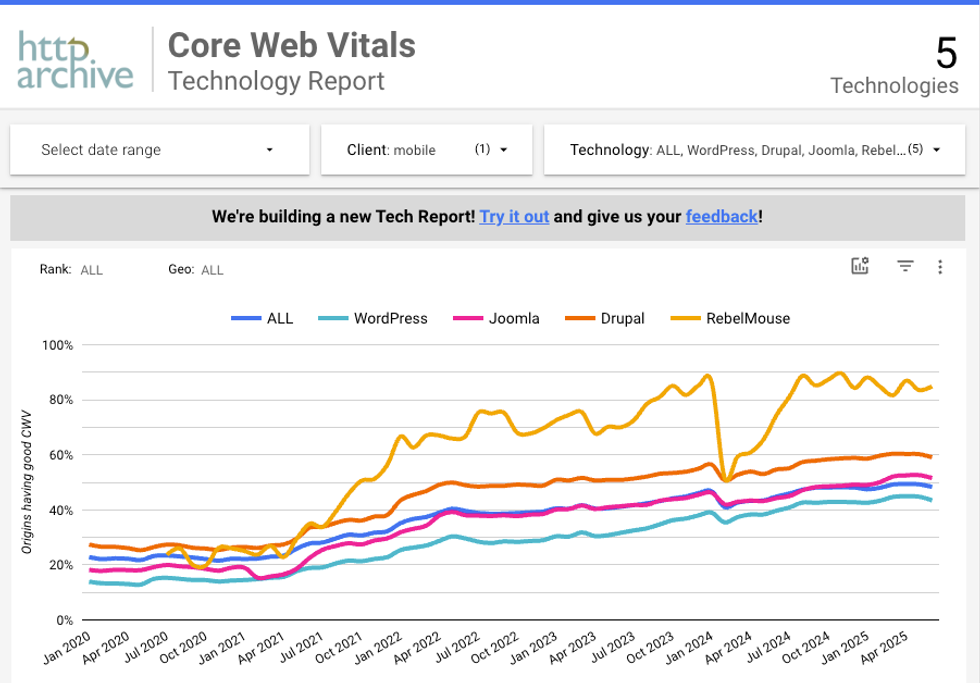
The RebelMouse CMS doesn’t have plugins. We built our CMS to outperform every other platform when it comes to technical SEO, web performance, security, and stability. Where other platforms need plugins, RebelMouse builds the tools within the CMS in an optimized way.
We’d love to help you escape from the plugin-focused website. Let’s talk! Our strategy team loves to help websites maximize their performance and value. Book a call with one of our experts today.


